

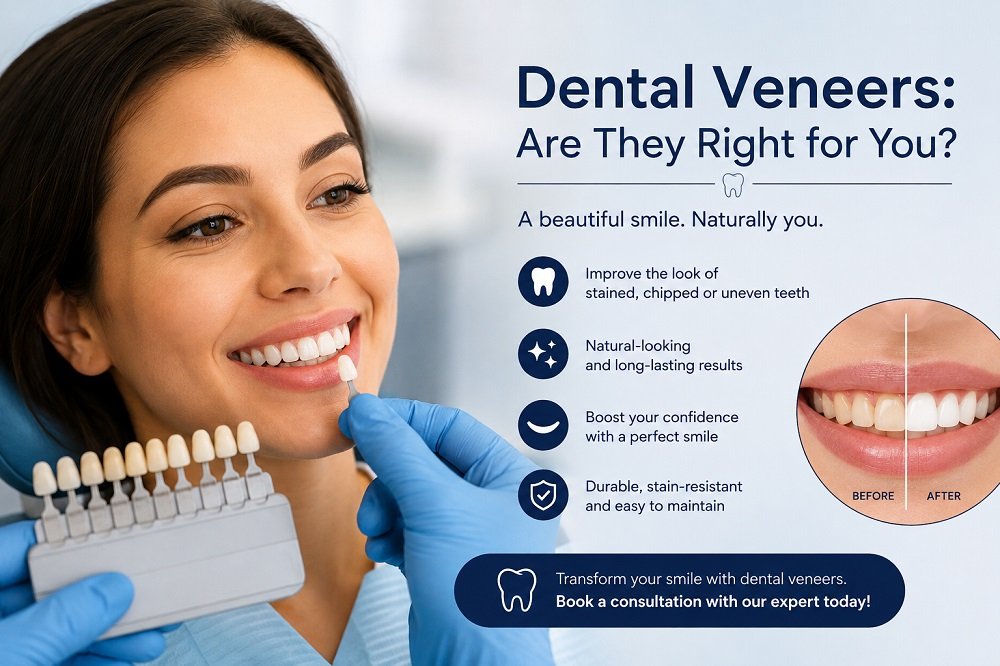
A confident smile can make a big difference in how you look and feel. If you are unhappy with chipped, stained, uneven, or slightly misshapen teeth, dental veneers may be one of the cosmetic dentistry options worth considering. Veneers are designed to improve the appearance of teeth while creating a more balanced and natural-looking smile.
But are veneers suitable for everyone? The answer depends on your dental health, smile goals, and expectations. Before choosing treatment, it is important to understand what dental veneers are, how the procedure works, their benefits and limitations, and how to determine whether they are right for you.
What Are Dental Veneers?
Dental veneers are thin, custom-made shells that are placed over the visible front surfaces of teeth. They are generally created from materials such as porcelain or composite resin and are designed to match the shape and color of your natural teeth.
Veneers can be used to address several cosmetic concerns, including:
- Stained or discolored teeth
- Small chips or cracks
- Slightly uneven teeth
- Gaps between certain teeth
- Irregular tooth shapes
- Minor cosmetic imperfections
- Teeth that appear worn or disproportionate
Unlike treatments that move teeth into a new position, veneers primarily focus on improving their appearance.
How Do Dental Veneers Work?
Getting veneers usually involves a consultation, treatment planning, preparation, and placement.
1. Dental Consultation
The first step is a thorough examination by a dentist. Your teeth and gums need to be healthy before cosmetic treatment begins. Your dentist may assess your bite, tooth structure, existing restorations, gum health, and overall oral hygiene.
This appointment is also an opportunity to discuss what you want to change about your smile. A good treatment plan should focus on creating results that complement your facial features rather than simply making teeth look extremely white or uniform.
2. Treatment Planning
Once your dentist determines that veneers may be appropriate, the desired tooth shape, size, shade, and overall appearance can be planned.
Depending on your case, photographs, digital scans, impressions, or other diagnostic methods may be used to help design the treatment.
3. Tooth Preparation
Some veneer treatments require a small amount of enamel preparation to create space for the veneer and allow it to sit properly on the tooth.
The amount of preparation varies from person to person and depends on the type of veneer, the existing position of the teeth, and the desired result.
4. Veneer Placement
Once the veneers are ready, they are carefully fitted and bonded to the teeth. Your dentist checks their appearance, fit, bite, and overall harmony with your smile before finalizing the treatment.
Who Can Benefit From Dental Veneers?
Veneers may be an option for people who have relatively healthy teeth and want to improve specific cosmetic concerns.
You may be a potential candidate if you have:
- Persistent tooth discoloration that does not respond well to whitening
- Minor chips or cracks
- Uneven or irregularly shaped teeth
- Small gaps between teeth
- Mild cosmetic imperfections
- Teeth that appear worn
- A desire for a more uniform smile
However, veneers are not necessarily the first choice for every cosmetic concern. Your dentist should evaluate your teeth and recommend the most appropriate option based on your individual needs.
When Veneers May Not Be the Best Option
Although veneers can provide excellent cosmetic improvements, they are not suitable for everyone.
People with untreated dental problems may need to address those issues first. For example, active tooth decay, significant gum disease, or other oral health concerns may need treatment before cosmetic procedures are considered.
Veneers may also be less suitable for people who regularly grind or clench their teeth. In such situations, your dentist may discuss protective measures or alternative treatments.
If teeth are significantly misaligned, orthodontic treatment may be more appropriate than veneers. Similarly, severely damaged teeth may require restorative treatment such as crowns rather than cosmetic veneers.
Benefits of Dental Veneers
Improved Smile Appearance
One of the main reasons people choose veneers is to improve the overall appearance of their smile. Properly planned veneers can create a more balanced and harmonious look.
Natural-Looking Results
High-quality veneers can be designed to resemble natural tooth enamel. The shape, shade, translucency, and proportions can be customized according to your smile.
Address Multiple Cosmetic Concerns
Veneers can sometimes address several cosmetic issues at the same time, including discoloration, minor chips, uneven shapes, and small gaps.
Customized Treatment
Every smile is different. Veneers can be customized according to your facial structure, tooth proportions, and personal preferences.
Improved Confidence
For people who feel self-conscious about certain cosmetic imperfections, improving the appearance of their teeth may help them feel more comfortable when smiling and interacting with others.
Porcelain Veneers vs Composite Veneers
There are different types of veneers, and your dentist can help you determine which option is appropriate.
Porcelain Veneers
Porcelain veneers are thin ceramic restorations designed to provide a natural-looking appearance. They are generally more resistant to staining than composite resin and can offer long-lasting cosmetic results when properly maintained.
Composite Veneers
Composite veneers are made from tooth-colored resin. They can often be placed more quickly and may require less alteration of the natural tooth structure, depending on the case.
However, composite material can be more susceptible to staining and wear compared with porcelain.
The right choice depends on factors such as your dental condition, budget, cosmetic goals, and long-term expectations.
Are Dental Veneers Permanent?
Veneers are considered a long-term cosmetic treatment, but they are not necessarily permanent for life. Their longevity depends on factors such as the material used, oral hygiene, biting forces, lifestyle habits, and regular dental care.
Even high-quality veneers can eventually require replacement or maintenance.
This is why it is important to view veneers as a long-term commitment rather than a quick cosmetic solution.
How to Take Care of Dental Veneers
Good oral hygiene remains important after receiving veneers.
Follow these basic habits:
- Brush twice a day using a suitable toothpaste.
- Floss regularly to keep the areas between teeth clean.
- Visit your dentist for routine checkups.
- Avoid biting very hard objects.
- Do not use your teeth to open packages.
- Follow your dentist’s recommendations for protecting your veneers.
- If you grind your teeth, discuss a suitable night guard with your dentist.
Although veneers can improve the appearance of your teeth, the underlying teeth and gums still require proper care.
Can Veneers Fix Crooked Teeth?
Veneers can sometimes improve the appearance of mildly uneven or slightly misaligned teeth. However, they do not physically straighten teeth in the same way as braces or clear aligners.
If you have significant crowding, rotation, or bite problems, orthodontic treatment may be a better solution.
Your dentist can assess your smile and explain whether veneers, aligners, braces, or another treatment would provide the most appropriate result.
How Much Do Dental Veneers Cost?
The cost of veneers varies from patient to patient. Factors that can influence the overall cost include:
- Type of veneer material
- Number of teeth being treated
- Complexity of the case
- Laboratory and customization requirements
- Preparation required before treatment
- Dentist’s experience and expertise
- Follow-up and maintenance needs
Instead of choosing a treatment based solely on price, it is important to consider the quality of materials, treatment planning, dentist’s experience, and long-term value.
How to Choose the Right Dentist for Veneers
Choosing the right dental professional is an important part of achieving a natural-looking result.
When evaluating a dentist, consider:
Experience With Cosmetic Dentistry
Ask about the dentist’s experience with veneers and other cosmetic procedures.
Treatment Planning
A good cosmetic treatment should be carefully planned around your facial features, existing teeth, bite, and desired outcome.
Material Quality
Ask which veneer materials are available and why a particular option is recommended for your situation.
Oral Health Assessment
Cosmetic dentistry should not overlook the health of your teeth and gums. Any underlying dental issues should be identified before veneers are placed.
Clear Communication
Your dentist should explain the benefits, limitations, alternatives, expected maintenance, and potential risks before treatment begins.
If you are researching the best dental veneers in Delhi, focus not only on the final appearance but also on the dentist’s experience, treatment planning, materials, and long-term approach to your oral health.
Are Veneers Worth It?
For the right patient, veneers can be an effective way to improve several cosmetic concerns and create a more confident smile. However, they are not a universal solution.
The best treatment depends on the condition of your teeth, your expectations, and the type of changes you want to make. In some cases, professional teeth whitening, bonding, orthodontic treatment, crowns, or other procedures may be more appropriate.
A consultation with an experienced dental professional can help you understand your options before making a decision.
If you are looking for the best dentist in Pitampura for cosmetic dental concerns, schedule a consultation to discuss your smile goals and find out whether veneers are suitable for your teeth.
Final Thoughts
Dental veneers can transform the appearance of a smile by addressing issues such as discoloration, small chips, minor gaps, and irregular tooth shapes. However, choosing veneers should be based on a proper dental assessment rather than simply following a cosmetic trend.
Healthy teeth and gums, realistic expectations, professional treatment planning, and proper aftercare all contribute to successful results.
If you are considering veneers, talk to your dentist about your concerns and ask about the advantages, limitations, alternatives, and maintenance involved. A personalized consultation can help you decide whether veneers are the right choice for your smile.